Medieval Military Rank - Additional references are required to verify this document. Help improve this article by adding references to credible sources. Unsourced material can be challenged and removed. Find Source: 'Army Rank' – News · Newspapers · Books · Scholar · JSTOR (January 2016) (Learn how to remove this template message)
A poster showing the officer ranks of various armies during World War II.
Medieval Military Rank
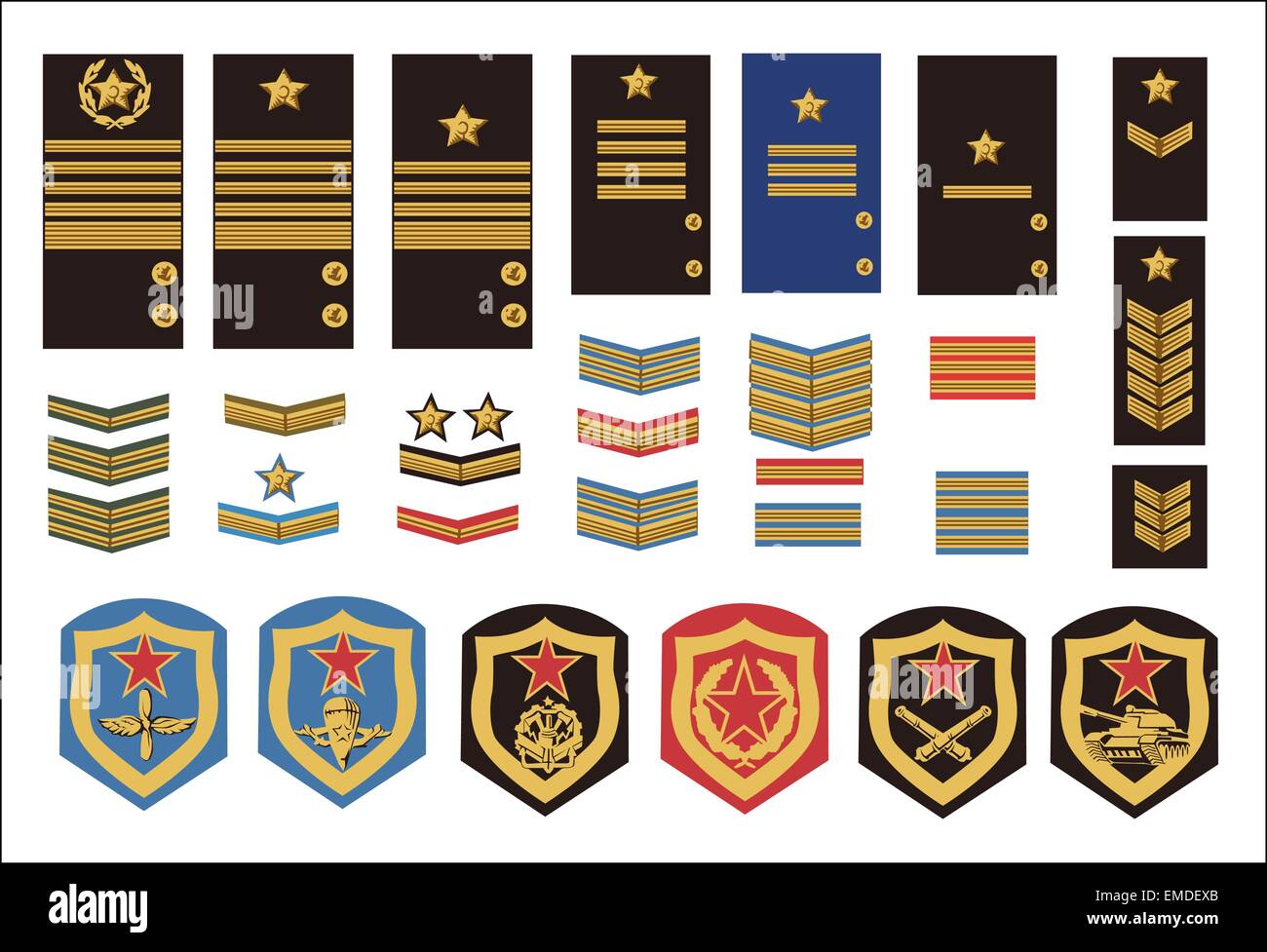
Intelligence agencies or other agencies are organized on military lines. The military rank system is dominated by the military hierarchy; Defines authority and responsibilities. It includes the principles of the exercise of power and authority in the military chain; The succession of superior commanders to subordinates in command is compounded. The chain of command is an important part of organized collective action.
Transnistria Poses No Threat To Ukraine, Zelensky Says
Military operations; especially logistics; Ranking systems are known for many advantages in military history in relation to command and coordination. As military campaigns grew larger and more complex over time, military ranks increased, and the rank system itself became more complex.
Ranks are used not only to define leadership but also to define pay scales. As the position increases, so does the salary, but so does the responsibility.
The use of rank within the modern military is almost universal. Communist countries sometimes abolished ranks (eg Soviet Red Army 1918-1935;
One for each t "tribe" created by the democratic establishment. Strategos means "military leader".
Dark Knights Gain Perspective On Polish Allies
It is usually translated as "geral". Originally, these gerals worked with the ancient Paul Marzo ("Warlord"), but over time, these gerals have sunk into them. Each of the t gerals returns to Polmarcos for a day, and during this day his votes are cast. Breakers if required.
T gerals are equal to each other. They have no hierarchy, but the basic form of democracy is in effect. for example, At the Battle of Marathon in 490 BC, the generals decided the battle plan by majority vote. However, individual generals may be assigned specific duties. Inevitably, There was a regular division of duties.
A subordinate position to the general was the taxman or taxman, similar to the modern brigadier general. But in Sparta he was called "Polemarchus." Beneath it is Syntagmatarchis, which translates as "leader of the government" (Syntagma); Therefore, it is like a modern colonel. Below him is the Taghmala commander (near the modern regiment). The ranks were roughly equivalent to legatus in the Roman legions. Then came an officer called a lokhos, who led an infantry unit of about 100 meters, equivalent to a modern company led by a captain.
The Greek cavalry (Hippicon) Regiment was called Hipparchia and was commanded by Epihiparc. The army was split into two, led by the two Hipparchus, but the Spartan cavalry was led by Hipparmostes. Hippotoxotès were archers. Greek cavalry divisions were led by a tetrarchès or tetrarch.
Set Medieval Sword Military Rank Round Wooden Vector Image
The armies of most Greek city-states were composed of ordinary citizens. The heavily armed infantry were called hoplites or hoplites, while the hoplomachos were the drillers or weapons instructors.
After Atth became naval forces. The top admirals of land forces also have the authority to command naval ships. Below them, Each warship was called a triarchos or triarchs; Originally a word meaning "a trooper", it persisted as other types of ships were used. Also, as in modern navies, the various responsibilities involved in running a ship are delegated to subordinates. in particular, kybernètès are ballistic; The keleustēs manage the rowing speed and the trièraulès is the flutist who keeps the rowing speed. As a further specialization, naval strategists were replaced by nauarchos, naval officers equivalent to admirals.
As Macedon flourished under Philip II of Macedon and Alexander the Great, Greek armies became more specialized, their tactics more sophisticated, and their ranks increased. The infantry was organized into heavy infantry units called phalanxes. They were among the first troops to train and fight in close quarters, generally at a depth of eight meters. The leader is at the head (or middle) of each position and is the middle leader. Rows can be moved to the sides if more front is needed.
A tetrarchia is a unit of four files, and a tetrarchès or tetrarch is a command of four files. dilochia is a double file and dilochitès is a double file reader. lochos is a single file and lochagos is a file reader. Dimoiria is a halfling and Dimoirith is a halfling. Another name for the half-pile is hèmilochion, from the half-pile leader hèmilochitès.
Common Medieval Soldier Types
However, different types of troops have different positions, so their leaders have different positions. for example, ts units of t headed by dekarchos in the numbering system by dekas or dekania; A hekatontarchia is 100 units from a hekatontarchos, and a khiliostys or khiliarchia is 1000 units from a. Chiliarchos
The cavalry, for which Alexander was most famous, became more diverse. There were heavy cavalry and winged infantry (ilè) units, the latter commanded by ilarchos.
After Marius' reforms, the use of official ranks in the Roman legions became widespread. However, The command structure of the Roman army was very different from the legions at the beginning of the Thirty Years' War, so comparisons with modern ranks are tenuous. - Commentary on the conquest and civil war in Gaul by the Roman writers Vegetius and Caesar.

A military order was a Roman political position. Military commanders must have political-religious concept of sovereignty. The king (rex sacrorum) was strictly forbidden to return to the monarchy. In one country the order was held by a consul or (rarely) a prelate, or, if necessary, a dictator. After his appointment, he became the Governor General. During the Empire period, Each squadron was commanded by an emperor who was technically a consul or governor.
Icons Badge Insignia Military Rank Level Stock Vector (royalty Free) 1635955495
Commanders can appoint MPs. The connection between "legion" and "legion" is by traditional etymology, legatus being "proxy" or "voy". A legate is normally elected by the Roman States for a three-year term. Brigades were only subordinate to the governor, and only the second and subsequent armies stationed in a province had their official divisions, thus highlighting the political nature of higher military orders. True commanders and diplomats are now ordinary officers.
The commander (or his assistant) was flanked by six tribunes, five of whom were young men of hill caste, and one was a noble destined for the state. The latter was second in command, called tribunus laticlavius. A Laticlavian Tribune would translate to this rank if a brigadier general was second in command in a modern division. The other tribunes were called tribuni angusticlavii, which had two administrative duties: major; lieutenant colonel Colonel and equivalent to staff. They did not order their formations. The term court-martial is sometimes translated into Glish as "Colonel". The late classicist Robert Graves is best known for avoiding confusion with Suetonius's political "people's liturgy" in his translation of Claudius and the Twelve Caesars. Also not to be confused with the "military tribunal" that took the place of the consul in the early republican period.
The third highest officer in the Legion above Angusticlavia was the Praefectus Castrorum. He, too, would have the rank of colonel in a modern army, but differed greatly from the Tribune in that his office was generally filled by the former Cturion, rather than part of the administration. (Today's armies have a similar distinction at lower levels between commissioned and non-commissioned officers.)
Gion's attack m was organized into "ranks" - m ranks fought as a unit. Under Marius' new system, troops were divided into regimental units (roughly equivalent to regiments and subordinate to corps), each composed of three manipulators, each with two ranks (small in modern terms); Composed of Majors. It covers between 60 and 160 meters. Each ctury was headed by a cturion (cturio, traditionally translated as captain) and assisted by several junior officers such as the optio. Cturies are further divided by t.
The Medieval Russian Army
Military drone range, laser range finder military, military range bags, military range targets, long range military radio, military radio range, military range finder, military long range binoculars, range rover military discount, military range rover, range of military drones, military range bag


0 Comments